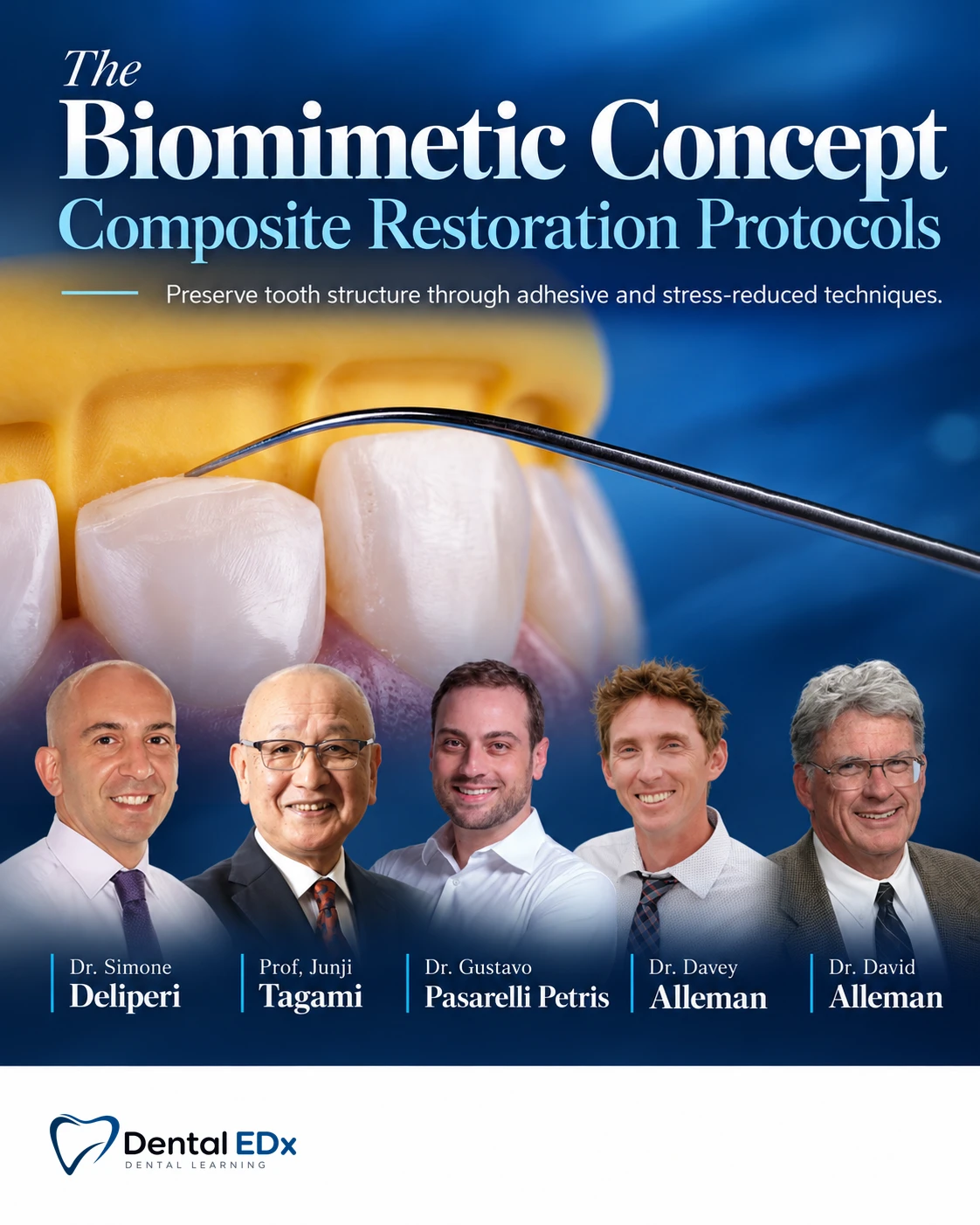

Educational scope. This article supports professional learning and case discussion. It is not patient-specific advice, a clinical protocol or a substitute for supervised training.
The detail of anterior composite layering can distract from the larger restorative objective. A useful learning sequence identifies the intended tooth form first, then studies how the demonstrated material choices support it.
CLINICAL TAKEAWAY
What matters most
- Separate shape from color decisions.
- Record the material system.
- Look for follow-up and maintenance.
EVIDENCE LENS
The ADA classifies resin composites among direct restorative materials; a material category does not prescribe a single layering sequence.
Begin with a clear shape reference
Record which aspects of the original tooth or proposed design the clinician is trying to reproduce. Separate length, width and contour questions from color questions. This makes it easier to understand why a demonstration changes the restoration at a particular stage.
Read the material sequence in context
Name the composite system and the role assigned to each material in the demonstration. Do not assume that similarly named shades from different systems behave identically. Where clinical instructions are needed, use the current manufacturer guidance rather than an abbreviated social-media sequence.
Assess beyond the immediate photograph
Look for the clinician’s explanation of finishing, review and any later intervention. A favorable image at placement does not answer every maintenance question. Use your study notes to connect the initial design with what the case reports over time, including uncertainty rather than only the best image.
Establish silhouette and volume before effects
Incisal position, line angles, contact form and facial volume have a greater impact on the perceived tooth than small internal characterizations. A staged review keeps detail from distracting from primary form.
Use the material system as documented
Opacity, translucency and shade naming vary by manufacturer. Training should connect the demonstrated layer to the actual material instructions rather than turning a brand-specific recipe into a universal thickness rule.
Turn the topic into a structured team review
Choose one de-identified case that raises the question of anterior composite layering. Review it in stages rather than jumping to the final image: define the patient-centered objective, list the available records, identify who made each decision and mark every assumption or missing item. Then compare the sequence with the cited evidence and the applicable manufacturer or professional guidance. The objective is to understand why this pathway was selected, not to reproduce a technique from an article.
Repeat the review after delivery or follow-up and ask what the team would change. Use these checkpoints: Separate shape from color decisions. Record the material system. Look for follow-up and maintenance. Record disagreements between the clinical, technical and maintenance perspectives instead of forcing an immediate consensus. A short, documented calibration exercise makes the article useful to the whole team and creates questions that can be taken into formal education, mentoring or supervised practice.
TAKE INTO YOUR NEXT CASE DISCUSSION
Three points to keep in view
- Separate shape from color decisions.
- Record the material system.
- Look for follow-up and maintenance.
Evidence & references
The ADA classifies resin composites among direct restorative materials; a material category does not prescribe a single layering sequence.
- Materials for Direct Restorations American Dental Association
References support the evidence discussion, not an endorsement of DentalEDX. Practical study prompts are editorial suggestions. No patient outcomes or professional accreditation are promised.
A common question
Is a complex shade recipe necessary for every anterior restoration?
Not necessarily. The required approach depends on the restorative objective and the selected material system.
CONTINUE LEARNING
Explore this topic in more depth.
Review the curriculum and prerequisites to choose teaching that fits your experience.