Educational scope. This article supports professional learning and case discussion. It is not patient-specific advice, a clinical protocol or a substitute for supervised training.
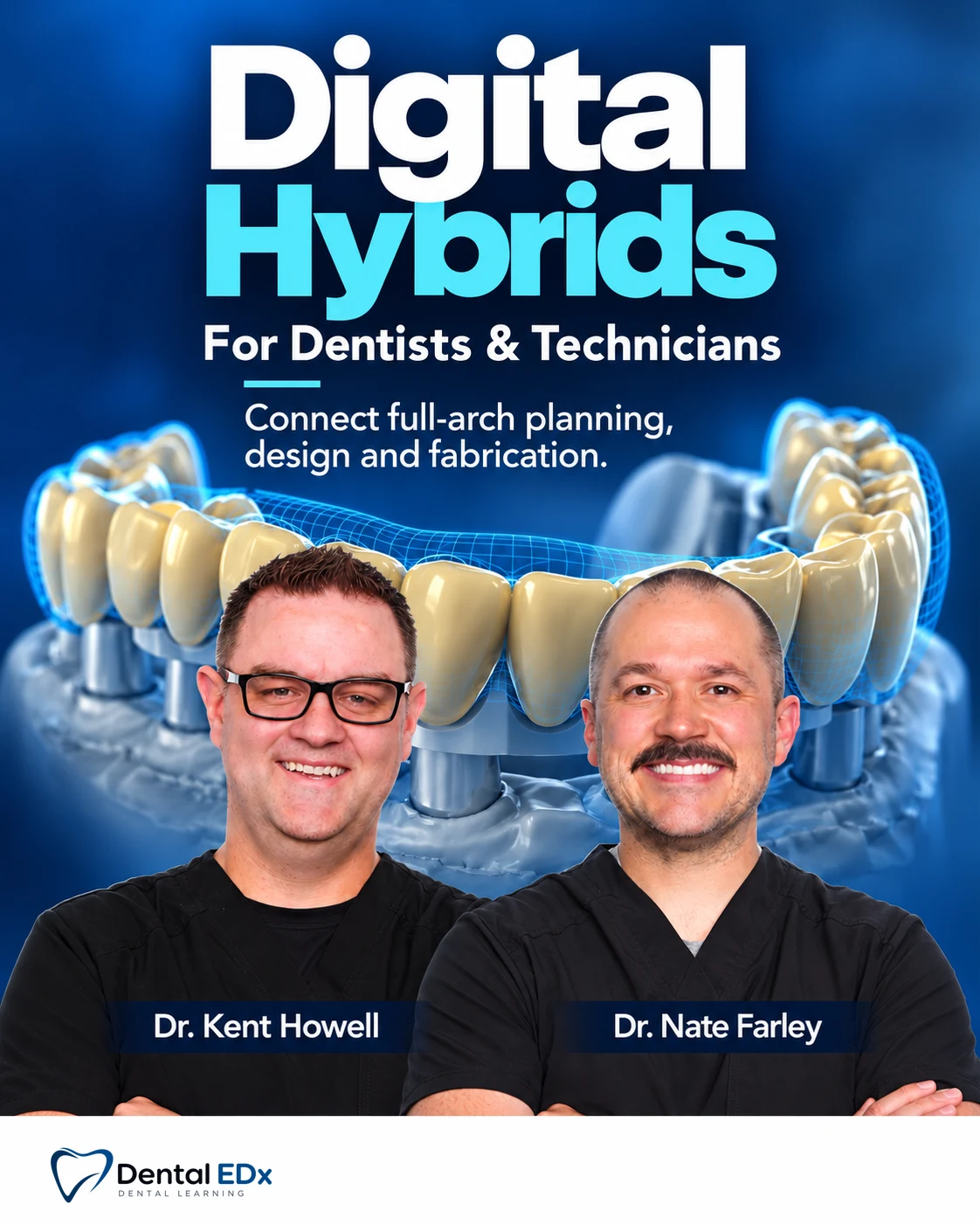
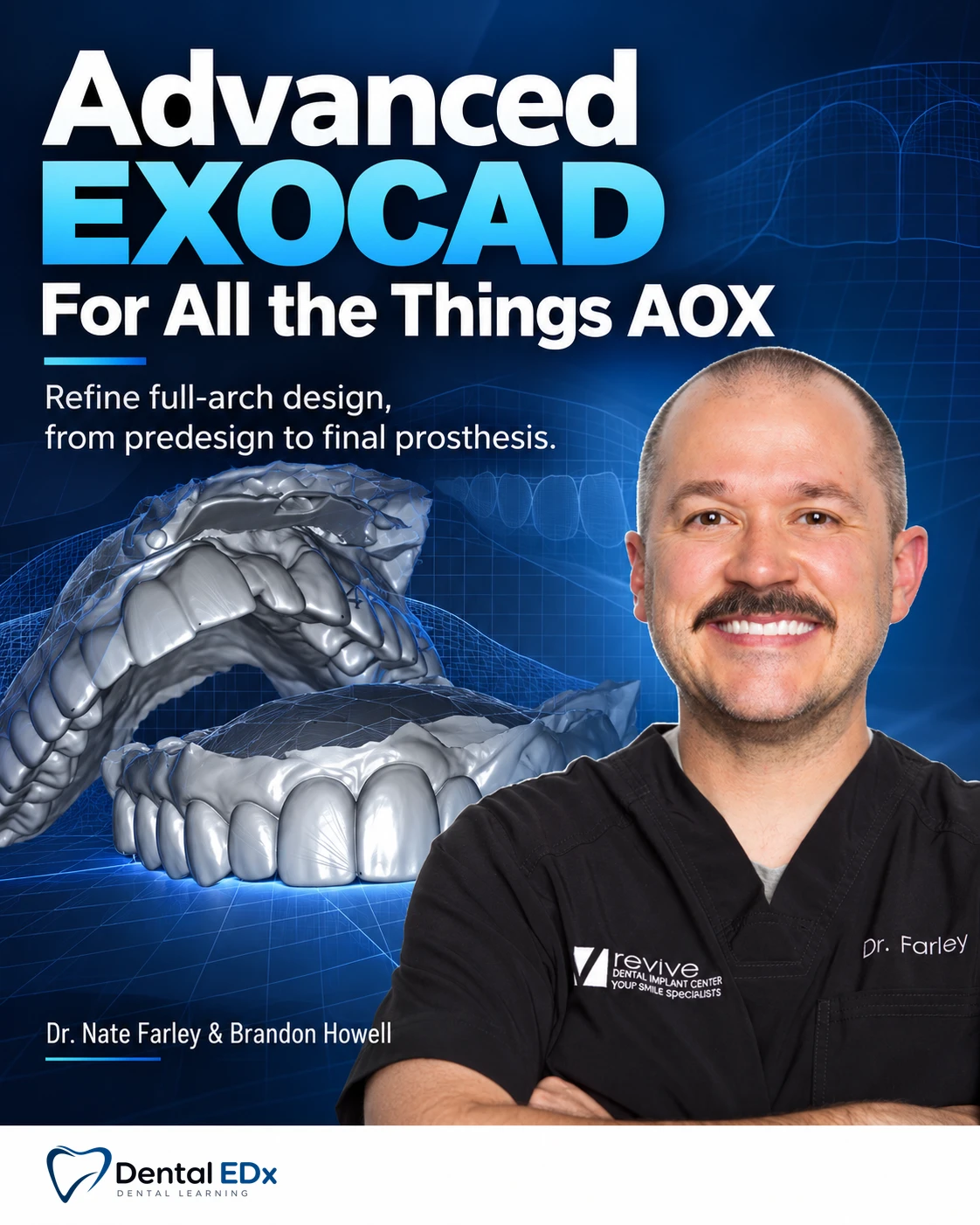
Digital hybrid workflows are interdisciplinary. Their predictability depends on how well surgical records, prosthetic objectives, component data, CAD decisions and manufacturing are coordinated.
CLINICAL TAKEAWAY
What matters most
- Share one restorative objective.
- Verify implant data.
- Design for maintenance and CAM.
EVIDENCE LENS
Implant and CAD documentation describes component and design capabilities; the integrated clinical workflow still requires professional verification.
Create one shared restorative brief
Document tooth display, vertical relationship, transition zone, component plan, material and maintenance objectives before design begins.
Verify the implant record
Review acquisition method, component identity, alignment and any verification procedure. Do not let a visually complete arch hide uncertainty in implant position.
Design for the patient and the CAM process
Balance esthetics, strength, hygiene, repairability and production limits. The chosen material and manufacturing route affect design parameters.
Record the delivery corrections
Fit, occlusion, speech, esthetics and hygiene instruction should be documented. Adjustments become useful data when returned to the clinical and laboratory teams.
Define the provisional-to-definitive transfer
List which features of the provisional must be preserved—such as tooth position, vertical relationship, tissue support, speech or occlusal scheme—and how each is transferred into the definitive design. Avoid treating the provisional merely as a temporary object.
Changes made during healing should be dated and explained. A clean transfer record helps the designer distinguish intentional refinements from accidental differences created by a new scan, file alignment or library selection.
Turn the topic into a structured team review
Choose one de-identified case that raises the question of digital hybrid denture workflow. Review it in stages rather than jumping to the final image: define the patient-centered objective, list the available records, identify who made each decision and mark every assumption or missing item. Then compare the sequence with the cited evidence and the applicable manufacturer or professional guidance. The objective is to understand why this pathway was selected, not to reproduce a technique from an article.
Repeat the review after delivery or follow-up and ask what the team would change. Use these checkpoints: Share one restorative objective. Verify implant data. Design for maintenance and CAM. Learn from delivery. Record disagreements between the clinical, technical and maintenance perspectives instead of forcing an immediate consensus. A short, documented calibration exercise makes the article useful to the whole team and creates questions that can be taken into formal education, mentoring or supervised practice.
TAKE INTO YOUR NEXT CASE DISCUSSION
Three points to keep in view
- Share one restorative objective.
- Verify implant data.
- Design for maintenance and CAM.
- Learn from delivery.
Evidence & references
Implant and CAD documentation describes component and design capabilities; the integrated clinical workflow still requires professional verification.
- DentalCAD Implant Module exocad · Manufacturer documentation
- DentalCAD: features and add-on modules exocad · Manufacturer documentation
References support the evidence discussion, not an endorsement of DentalEDX. Practical study prompts are editorial suggestions. No patient outcomes or professional accreditation are promised.
A common question
Is a digital hybrid workflow owned by the laboratory?
No. It is a shared clinical–technical pathway with responsibilities at each handoff.
CONTINUE LEARNING
Explore this topic in more depth.
Review the curriculum and prerequisites to choose teaching that fits your experience.