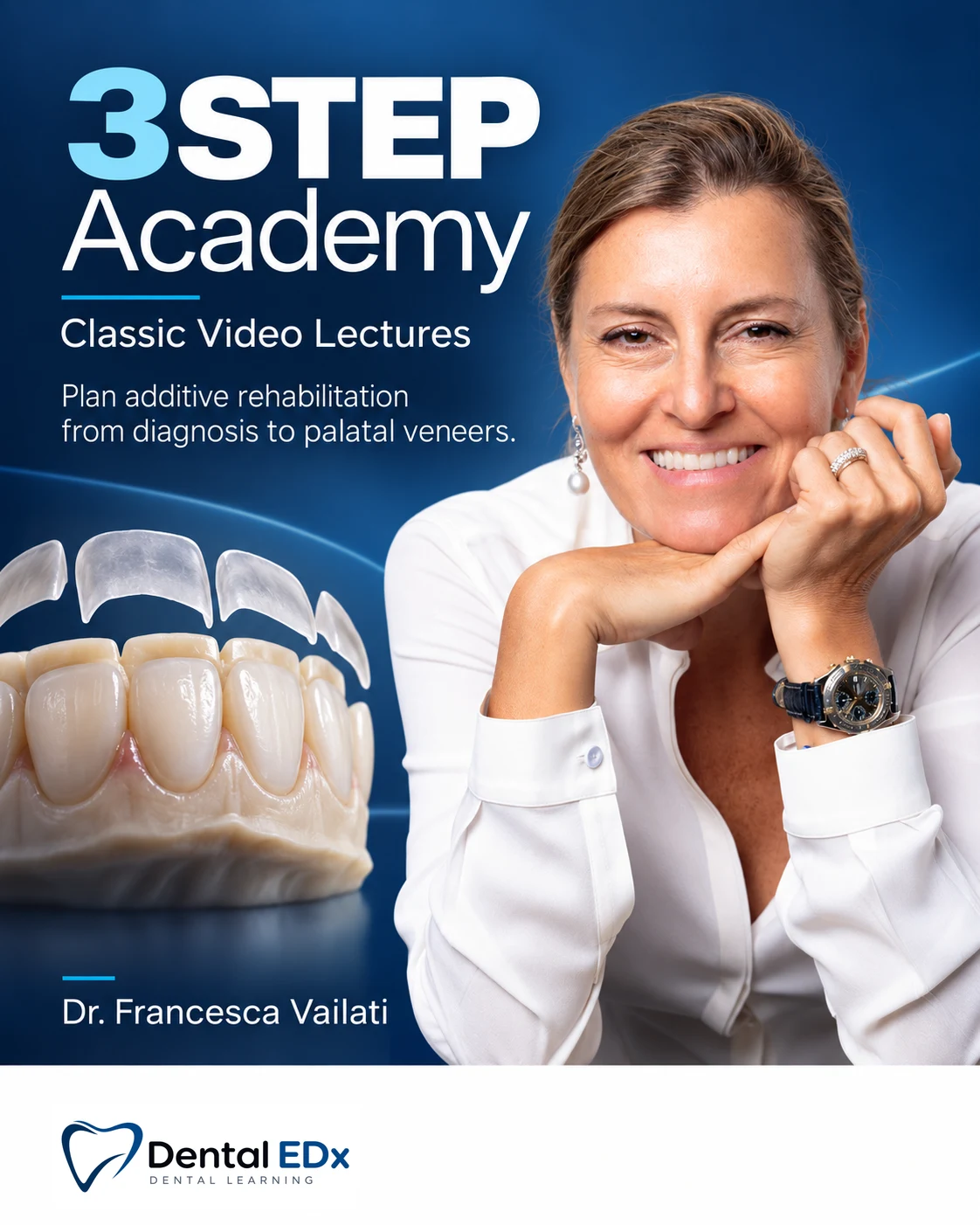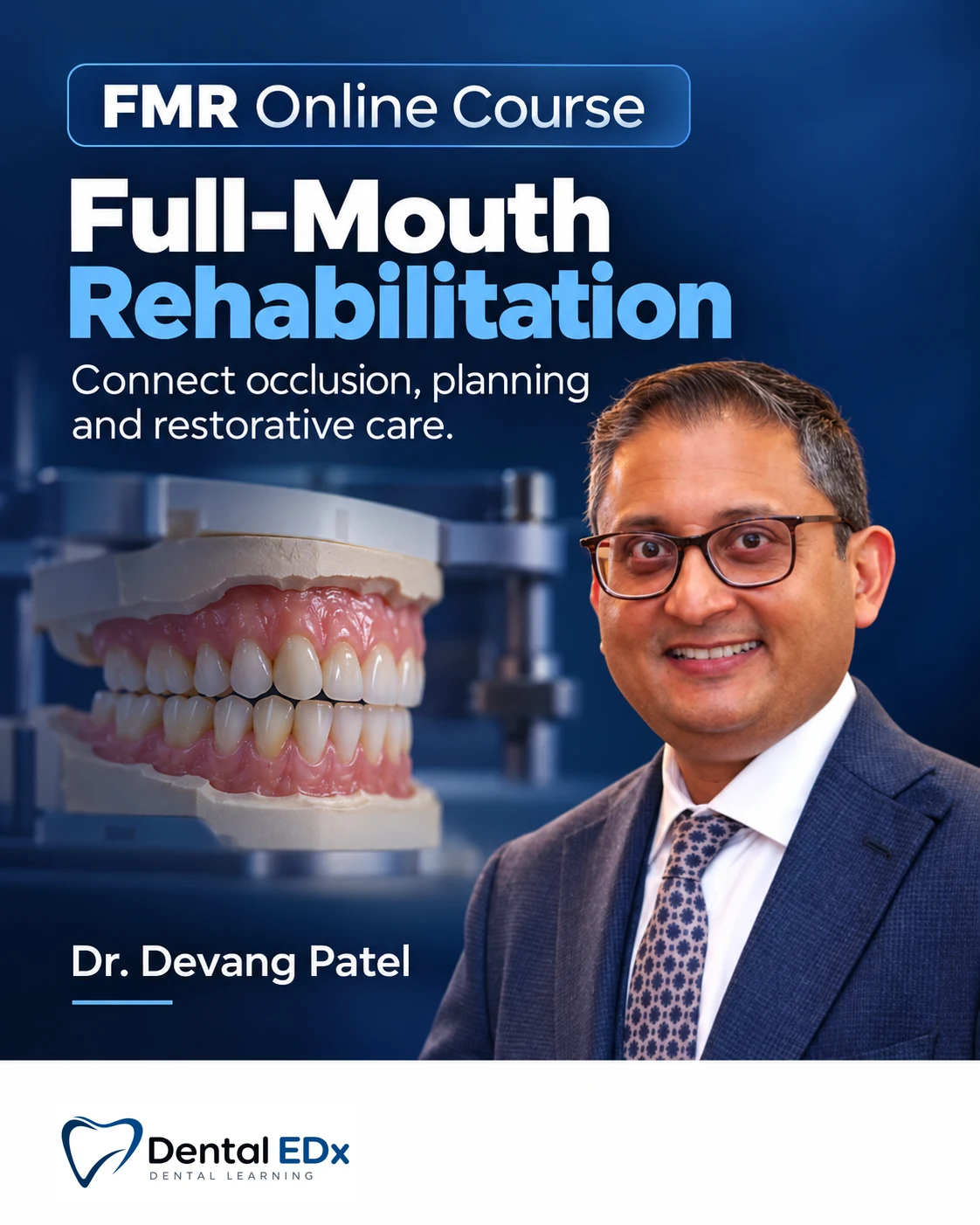

Educational scope. This article supports professional learning and case discussion. It is not patient-specific advice, a clinical protocol or a substitute for supervised training.
Restoring a worn dentition is more than reproducing missing shape. Before comparing additive techniques, establish what the case reports about the wear, the patient’s concerns and the purpose of the proposed rehabilitation.
CLINICAL TAKEAWAY
What matters most
- Establish the diagnosis and concern.
- Compare options against one objective.
- Review evaluation and maintenance.
EVIDENCE LENS
The 2025 worn-dentition consensus recognizes direct and indirect minimally invasive options while emphasizing individualized planning and remaining evidence gaps.
Separate appearance from the treatment indication
Document the patient’s stated concern and the clinician’s assessment. The degree of visible wear in a photograph does not, by itself, explain the timing or extent of intervention. Avoid building a treatment narrative from appearance alone.
Compare direct and indirect pathways
Ask how the case justifies its chosen approach and material. Consider the entire sequence, including evaluation, delivery and later review. The useful comparison is between options addressing the same clinical objective, not between unrelated showcase cases.
Include adaptation and maintenance in the discussion
Look for how expectations were managed and what was assessed before proceeding to the final stage. A course should explain the reasons for its sequence and the evidence limitations. Keep future intervention and monitoring in the plan rather than presenting restoration as a permanent endpoint.
Diagnosis comes before the additive plan
Document the pattern, rate and suspected contributors to wear, symptoms, available space and patient priorities. Restoring without addressing active causes can make a technically elegant result difficult to maintain.
Test the proposed change before definitive treatment
A diagnostic design or provisional phase can help evaluate esthetics, speech and function. The article should explain what is being tested and how feedback will alter the definitive plan rather than treating the trial as ceremonial.
Turn the topic into a structured team review
Choose one de-identified case that raises the question of tooth wear rehabilitation. Review it in stages rather than jumping to the final image: define the patient-centered objective, list the available records, identify who made each decision and mark every assumption or missing item. Then compare the sequence with the cited evidence and the applicable manufacturer or professional guidance. The objective is to understand why this pathway was selected, not to reproduce a technique from an article.
Repeat the review after delivery or follow-up and ask what the team would change. Use these checkpoints: Establish the diagnosis and concern. Compare options against one objective. Review evaluation and maintenance. Record disagreements between the clinical, technical and maintenance perspectives instead of forcing an immediate consensus. A short, documented calibration exercise makes the article useful to the whole team and creates questions that can be taken into formal education, mentoring or supervised practice.
TAKE INTO YOUR NEXT CASE DISCUSSION
Three points to keep in view
- Establish the diagnosis and concern.
- Compare options against one objective.
- Review evaluation and maintenance.
Evidence & references
The 2025 worn-dentition consensus recognizes direct and indirect minimally invasive options while emphasizing individualized planning and remaining evidence gaps.
- Rehabilitation strategies and occlusal vertical dimension in worn dentitions (2025) Ioannidis et al. · Journal of Esthetic and Restorative Dentistry
References support the evidence discussion, not an endorsement of DentalEDX. Practical study prompts are editorial suggestions. No patient outcomes or professional accreditation are promised.
A common question
Does all visible tooth wear need full-mouth rehabilitation?
No. The need and scope of intervention require an individual clinical assessment.
CONTINUE LEARNING
Explore this topic in more depth.
Review the curriculum and prerequisites to choose teaching that fits your experience.